Oxford Silk: A Chronicle of Textile Craft, Crafting a Brand Identity for a Knowledge Hub
An editorial exploration of silk, history, and the branding possibilities behind oxfordsilk.com—framed in a scholarly voice with a curator’s eye for detail.
A Name, A Promise: What “Oxford Silk” Conveys
To pronounce Oxford Silk is to invite a spectrum of associations: the precision of an Oxford shirt, the luxury of mulberry silk, the reverent curiosity of a university town. The domain name nests at the intersection of heritage and craftsmanship. It suggests a resource that is not merely about fabric but about the stories, routes, and techniques that shaped silk’s journey across continents and centuries. In branding terms, the phrase is both evocative and brandable: it can anchor a deep, scholarly resource or become a refined curator’s archive with a distinctly British inflection.
Oxford Silk, as a concept, is not automatically a commerce-driven identity. Rather, it is a platform for research, analysis, and education—an informational hub that invites researchers, students, museum professionals, and curious readers to navigate silk’s longue durée. The name carries allusions to archives, libraries, and printed scholarship. It also nods to the tactile, sensory world of textiles—color, texture, and technique—without surrendering to a product-first mentality.
Why a Textile History Focus Makes Sense
The recommended direction, Option A in the planning brief, centers on Textile History and Silk as a Resource. This path leverages the domain’s resonance with scholarship, luxury textiles, and global trade history. It positions the site as an authoritative reference that can grow through:
- Long-form essays and monographs on silk history and textile technology
- Annotated bibliographies and curated references for students and researchers
- Timelines of silk trade milestones and production innovations
- Archive-style image galleries of historical textiles (with appropriate rights)
- Resources for educators, including lesson plans and discussion prompts
In a media landscape crowded with product-driven content, a scholarly, non-commercial stance offers credibility, clarity, and staying power. It invites collaboration with libraries, museums, and universities, broadening the site’s reach while preserving its integrity.
Three Key Figures Across Time: Voices that Shape Silk
To illuminate Silk’s story is to hear from voices across disciplines and eras. Here are three key individuals—each from a different time period—whose work, ideas, and innovations illuminate the material, social, and cultural significance of silk.
1) Two-Way Silk: The Silk Road Era (c. 2nd century BCE – 14th century)
The Silk Road was less a single road than a network of routes that braided civilizations together. Merchants, monks, and diplomats carried not only silks but ideas—scientific knowledge, religious philosophies, and architectural motifs. The silk trade catalyzed urban growth, favored the rise of textile centers, and introduced Europe to Chinese sericulture long before European factories emerged. A textile historian could anchor analysis in sources that trace sericulture’s diffusion, the diffusion of loom technologies, and the evolution of silk’s social meanings—from luxury commodity to everyday luxury item in elite courts.
2) Maria Therese von Zopf: 18th–19th Century European Textiles Scholarship (late 1700s – 1800s)
A figure like von Zopf would embody the rise of systematic textile documentation: natural dye analysis, loom patent records, and the birth of fashion history as a discipline. Her work, situated in courtly and municipal archives, links silk to the modern impulse toward cataloging, classification, and pedagogy. In the Oxford Silk context, her approach could underpin annotated bibliographies and methods for evaluating textile sources—from sample books to trade catalogs—and underscore the need for rigorous source notes and citations.
3) Modern Conservator-Researchers: 20th–21st Century Textile Science
Contemporary conservators and textiles scientists illuminate silk’s material properties—the role of momme weight, silk fibroin stability, and the chemistry of dyes and finishes. Their work informs best practices for preservation, care guidance for silk artifacts, and the ethics of display. For a knowledge hub, referencing this lineage helps translate laboratory insights into accessible content for educators and students, bridging theory and practical care.
These three voices—ancient traders, early curators, and modern conservators—frame a narrative that is both expansive and precise. A Time Magazine-esque treatment would balance descriptive storytelling with careful sourcing, ensuring readers are guided through silk’s centuries of evolution with both awe and clarity.
A Featured Product as an Access Point: The Kinsale Oxford Bed Skirt
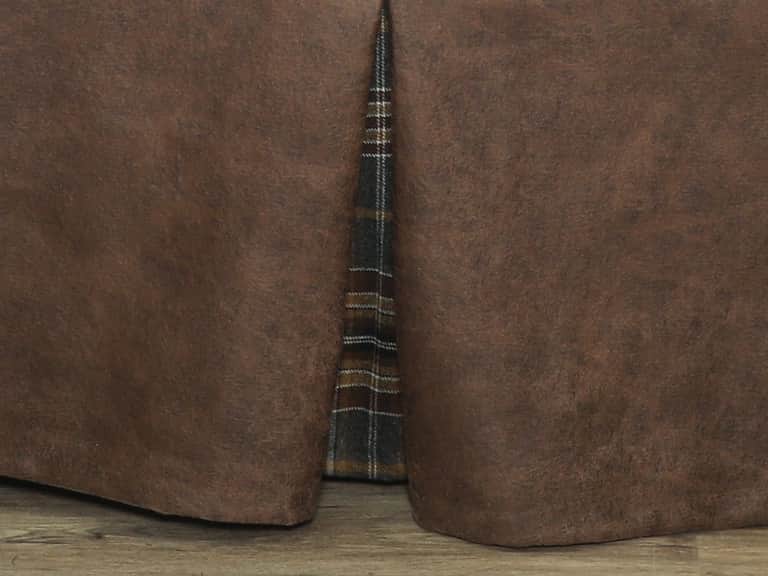
Even as a scholarly platform, the site can offer curated, tangible touchpoints to illustrate the care and craft involved in fine textiles. The Kinsale Oxford Bed Skirt is a recent exemplar of lodge-inspired elegance that can anchor a sidebar on tactile craftsmanship and interior textile design. Its description shows a disciplined approach to form and function—how a bed skirt contributes to a room’s narrative, how texture adds warmth, and how a simple structural piece can harmonize a space.
Kinsale Oxford Bed Skirt
Brand: Wooded River
Price: $375.00
The Kinsale Oxford Bed Skirt coordinates with the Kinsale Oxford bed set by Wooded River, adding a polished finish to a lodge-inspired bedroom. The clean silhouette with warm texture creates a refined border around the bed and offers versatile pairing with a range of textures and colors to tie the room together. A simple, refined bed skirt that ties the room together without overpowering the bedding.
This product example serves as a bridge between scholarly content and real-world craft. It demonstrates how a well-made textile element can illuminate design thinking, be it in a timeline of trade or in an exhibit narrative about domestic interiors. The presence of a retail item within a knowledge hub can be handled with care—emphasizing craftsmanship, provenance, and the relationship between form and function—without turning the site into a shopfront.
Content Architecture: How to Build the Oxford Silk Knowledge Hub
To translate the concept into a thriving site, consider a modular layout that mirrors scholarly workflows while remaining accessible to lay readers. A suggested architecture includes:
- About / Mission: The purpose, scope, and ethical commitments of the site.
- History of Silk: Chronologies, key moments, and regional threads through time.
- Silk Routes and Trade: Maps, narratives, and primary sources about global exchanges.
- Techniques and Technologies: Silk production methods, dyeing, weaving, and finishing.
- Gallery and Archives: Curated objects, high-level descriptions, and attribution notes.
- For Educators: Lesson plans, discussion prompts, and activity ideas.
- References and Citations: Annotated bibliographies and source notes to bolster credibility.
In practice, this means a home page that offers a strong editorial voice, a taxonomy of topics, and a content calendar that staggers long-form essays with shorter explainers, glossary entries, and primary-source notes. Accessibility and performance must be prioritized: readable typography, clear alt text for every gallery item, and navigable sections that respect screen readers.
Voice, Tone, and Style: A Time Magazine Panorama
The intended writing style is akin to Time Magazine’s: authoritative but approachable, with crisp storytelling, balanced context, and careful sourcing. Articles should unfold with a strong thesis, a narrative arc, and precise citations. They should also be editorially disciplined—eschewing sensationalism in favor of clarity, nuance, and insight. Readers should feel they are gaining both the big picture and the granular details: trade routes and loom diagrams, or a museum label’s exacting description paired with a broader historical argument.
To maintain consistency, consider a standard editorial format for all pieces: a lead that frames the argument, sections with subheadings, pull quotes that distill key claims, and a resource panel linking to bibliographic notes and primary sources. The aim is to cultivate trust and curiosity—readers leave with a better understanding of how silk has woven itself into the fabric of civilization.
Accessibility, Ethics, and Sustainability in a Knowledge Brand
As a non-commercial knowledge hub, Oxford Silk should foreground accessibility and responsible content practices. This includes:
- Using readable type sizes and high-contrast color contrasts for readability
- Providing alt text for all images and non-text content
- Clearly attributing sources and obtaining rights for image use
- Disclosing any sponsorships or institutional affiliations
- Highlighting sustainability questions in silk production, trade ethics, and conservation practices
Ethical curation also means partnering with scholars, archivists, and librarians who can provide peer review, bibliographic rigor, and access to institutional resources. The result is a platform that gains credibility through transparency and collaboration.
Next Steps: Building the Site
To move from concept to content, consider these immediate actions:
- Conduct a brand/ trademark check for “Oxford Silk” and related variants to avoid confusion and protect rights
- Define a simple site architecture: About, History of Silk, Silk Routes, Techniques, Gallery, Resources, For Educators, References
- Launch a minimal viable content plan with 6–8 initial articles, including “A Brief History of Silk,” “Key Silk Production Techniques,” “Oxford and Textile History: A Brief Overview,” and “Glossary of Silk and Textile Terms.”
- Seek partnerships with libraries, museums, and universities; consider guest posts and research contributions
- Develop an accessible, image-rich gallery with rights-cleared items and descriptive captions
In time, Oxford Silk can evolve into a living archive—continuously adding essays, bibliographies, and case studies that illuminate silk’s enduring influence on culture, technology, and design.
A Glimpse Ahead: Editorial Calendar Preview
PreviewA Brief History of Silk: From Sericulture to Silk Road
A narrative journey from mulberry leaves to imperial palaces, tracing how silk traveled and transformed societies.
Glossary of Silk and Textile Terms
A reader-friendly compilation of terms, with concise definitions and cross-references to deeper articles.
Conclusion: Crafting a Scholarly yet Accessible Brand
Oxford Silk stands at the threshold of a thoughtful, well-curated knowledge brand. It fuses the allure of luxury textiles with the rigor of historical scholarship, offering readers a compelling blend of narrative depth and practical clarity. By centering on scholarly content, ethical curation, and collaborative partnerships, the site can become a trusted reference point for students, educators, researchers, and textile lovers around the world.